
Choosing the Right Waterproofing Membrane: A Building Manager's Guide for Queensland Properties

When it comes to protecting a commercial or residential building, few maintenance decisions have a greater impact than selecting the right waterproofing membrane.
In Queensland's harsh climate, waterproofing systems are exposed to relentless UV radiation, heavy rainfall, humidity, thermal movement, and in many cases, salt-laden coastal air. Choosing the wrong membrane can result in premature failure, water ingress, expensive structural repairs, and even voided manufacturer warranties.
At Total Asset Maintenance (TAM-QLD), we're regularly asked the same question by building managers and body corporates:
"Which waterproofing membrane is best?"
The answer is simple.
There isn't one.
The best membrane depends entirely on the substrate, exposure, expected movement, traffic loading, and long-term maintenance strategy.
Understanding the strengths and limitations of each system is the first step towards making an informed decision.
Why Waterproofing Matters in Queensland
Queensland buildings experience some of Australia's harshest environmental conditions.
A waterproofing system may need to withstand:
Intense UV exposure year-round
Heavy summer rainfall
Tropical humidity
Wind-driven rain
Concrete movement
Salt exposure near the coastline
Ponding water on roofs and balconies
Without the correct membrane, moisture eventually finds its way into the building envelope, leading to:
Water ingress
Concrete deterioration
Reinforcement corrosion
Mould growth
Paint failure
Delamination
Internal damage
Preventative waterproofing almost always costs less than reactive remediation.
Solvent-Based Waterproofing Membranes
Solvent-based polyurethane membranes have long been regarded as one of the premium waterproofing systems available for exposed environments.
They cure to form a highly durable, seamless waterproof barrier capable of accommodating significant structural movement.
Best suited for
Exposed concrete roofs
Balconies
Plant decks
Podiums
Box gutters
Commercial roofs
Advantages
✔ Excellent adhesion to concrete
✔ Outstanding UV resistance (when used with the correct topcoat)
✔ High elasticity
✔ Excellent crack-bridging capability
✔ Long service life
✔ Suitable for complex detailing
Drawbacks
Higher material cost
Strong solvent odour during application
More stringent weather and substrate moisture requirements
Professional installation strongly recommended
For high-value commercial assets, solvent-based systems often provide the longest lifecycle when installed correctly.
Water-Based Waterproofing Membranes
Water-based acrylic membranes have become increasingly popular due to their ease of application and environmentally friendly characteristics.
These membranes perform exceptionally well in many applications but must be selected carefully depending on exposure conditions.
Best suited for
Residential balconies
Retaining walls
Internal wet areas
Light commercial applications
Areas with limited UV exposure
Advantages
✔ Low odour
✔ Easy application
✔ Environmentally friendly
✔ Quick cleanup
✔ Cost-effective
Drawbacks
Lower chemical resistance
Can soften under prolonged ponding water
Generally shorter service life than premium polyurethane systems
Performance varies significantly between manufacturers
For many buildings, water-based systems provide an economical solution where movement and weather exposure are moderate.
Rubber-Based Waterproofing Membranes
Rubber-based membranes, including butyl and EPDM systems, are often selected where exceptional flexibility and long-term movement accommodation are required.
These systems are commonly used for detailing, flashing, and specialist remediation works.
Best suited for
Flashings
Expansion joints
Penetrations
Roof detailing
Temporary waterproofing
Remedial works
Advantages
✔ Exceptional flexibility
✔ Excellent weather resistance
✔ Performs well under movement
✔ Fast installation
✔ Effective for difficult detailing
Drawbacks
Limited suitability as a complete roof coating
Installation quality is critical
Some products have aesthetic limitations
Compatibility with surrounding materials must be carefully assessed
Rubber-based systems are often used alongside liquid-applied membranes rather than replacing them.
There Is No "Best" Waterproofing Membrane
One of the biggest misconceptions in the industry is that one product outperforms every other system.
In reality, successful waterproofing depends on matching the correct product to the application.
Before specifying any membrane, experienced waterproofing consultants consider:
Concrete condition
Existing coatings
Expected structural movement
UV exposure
Drainage design
Traffic loading
Compatibility with adjoining materials
Manufacturer specifications
Future maintenance requirements
This is why two neighbouring buildings can require completely different waterproofing systems despite looking almost identical.
Why Waterproofing Systems Fail
Most membrane failures are not caused by poor products.
They're caused by poor preparation.
At TAM-QLD, we regularly investigate waterproofing failures where the membrane itself was suitable, but the installation wasn't.
Common causes include:
Inadequate surface preparation
Moisture trapped beneath the membrane
Incorrect primer selection
Poor detailing around penetrations
Failure to reinforce movement joints
Application outside manufacturer specifications
Incorrect film thickness
Blocked drainage systems
A premium membrane applied incorrectly will almost always fail before an average membrane installed properly.
Why Building Managers Choose TAM-QLD
Waterproofing isn't simply applying another coat of product.
It's understanding how water behaves.
Our team investigates the cause of deterioration before recommending a solution, ensuring the selected membrane is appropriate for the building's age, construction, exposure, and maintenance strategy.
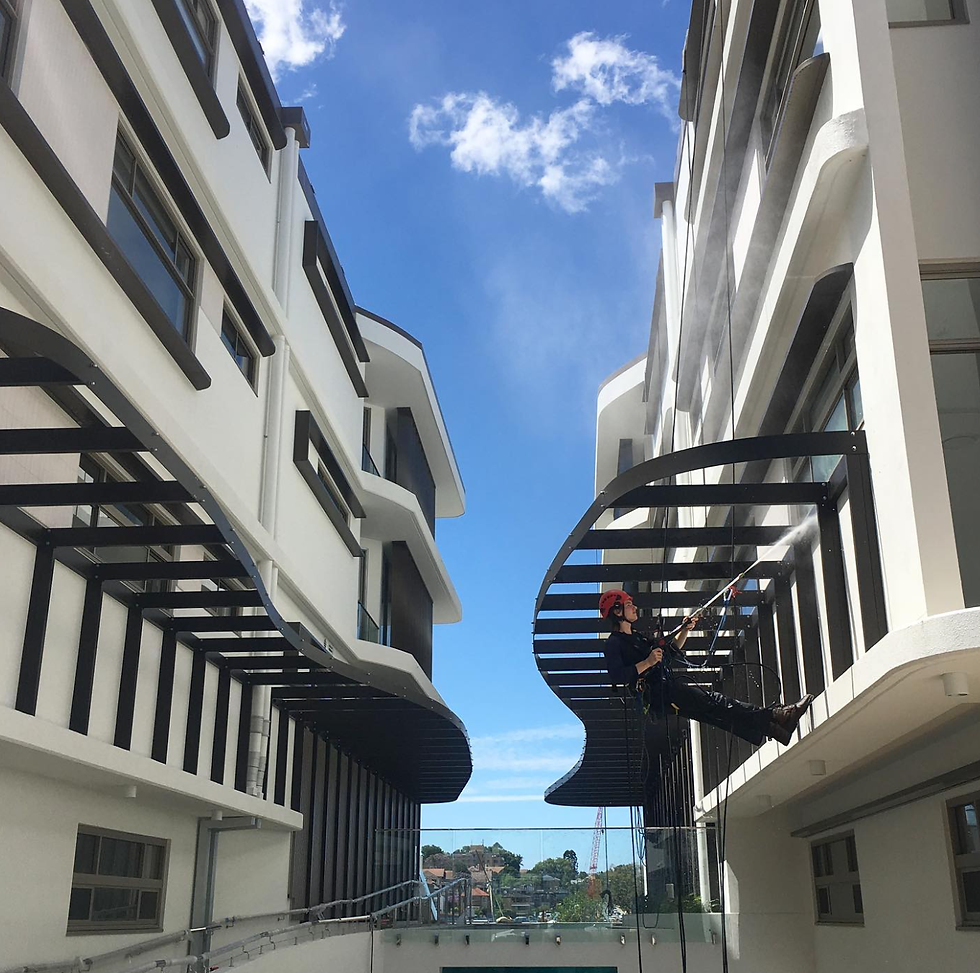
Whether we're waterproofing an exposed rooftop, a concrete podium, a balcony, or carrying out rope access remedial works on a high-rise façade, our approach remains the same:
Diagnose first. Specify correctly. Install professionally.
That philosophy has helped building managers across Brisbane reduce repeat failures, extend coating life, and better protect their maintenance budgets.
Protect Your Building Before Water Finds a Way In
Waterproofing should never be viewed as a reactive repair.
It is one of the most cost-effective investments a building owner can make to preserve structural integrity, maintain appearance, and reduce long-term maintenance costs.
If you're unsure whether your existing waterproofing system is performing as intended, TAM-QLD can provide a comprehensive assessment and recommend the most appropriate solution for your building.
Because the right membrane is only half the solution.
The real difference is knowing when, where, and how to use it.


Comments