
High-Rise Window Leaks in Brisbane: Why Most “Repairs” Never Actually Fix the Problem

Water leaking throuh windows in high-rise buildings is one of the most frustrating issues faced by building managers, body corporates, and facility managers across Brisbane.
The problem is, most leaks are rarely caused by one obvious defect.
In a lot of cases, water ingress comes from a combination of glazing failures, blocked drainage pathways, façade movement, deteriorated sealants, failed waterproofing, or even poor original installation. Throwing more silicone at it might stop the visible drip for a while, but it usually doesn’t solve the actual problem.
At Total Asset Maintenance (TAM-QLD), we specialise in methodical high-rise leak investigations focused on finding the real source of water ingress - not just masking the symptoms.
Why High-Rise Window Leaks Are So Difficult to Diagnose
Modern glazing and façade systems are designed to manage water, not completely stop every drop from entering the system.
Most commercial windows contain:
Drainage cavities
Pressure equalisation chambers
Weep holes
Flashing systems
Expansion joints
When one part of the system fails or becomes blocked, water can travel surprising distances before appearing inside the building.
That’s why leaks are so often misdiagnosed.
We regularly attend buildings where:
Multiple layers of silicone have already been applied
Previous contractors treated symptoms instead of causes
Drainage pathways have been accidentally blocked
Water has been trapped inside the façade system for years
In Brisbane’s climate, these issues escalate quickly due to:
Heavy seasonal rainfall
Intense UV exposure
Riverfront and coastal conditions
Thermal movement
High humidity and mould growth
Our Process for Water Ingress Investigations
1. Initial Assessment
Every investigation starts with a detailed assesment of the affected area.
We inspect:
Water staining
Active dripping
Paint failure
Mould growth
Corrosion
Previous repair attempts
Signs of movement or cracking

We also speak directly with building managers and occupants to understand:
When the leak occurs
Wind and rain conditions
Previous repair history
How long the issue has been happening
This helps establish likely failure points before testing begins.
2. Source Identification and Diagnostic Testing
Correctly diagnosing a high-rise leak requires patience, experience, and the right testing methods.
TAM-QLD uses a combination of diagnostic techniques including:
Visual Façade Inspection
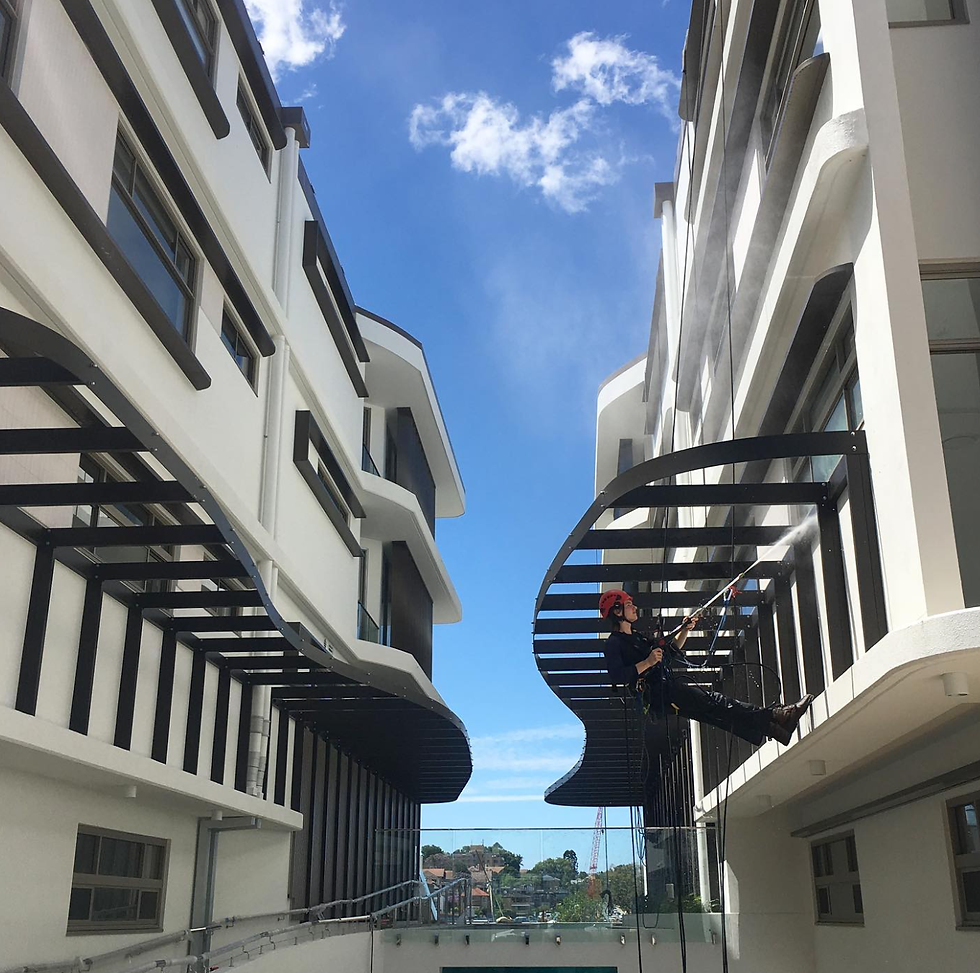
Our rope access technicians inspect glazing systems, sealants, joints, cladding interfaces, and drainage systems for visible defects or deterioration.
Dye Testing
Specialised dye testing allows us to trace concealed water pathways and identify hidden entry points.
Controlled Water Testing Using Rainwand™
Controlled water testing simulates realistic rainfall conditions so leaks can be replicated in a controlled enviroment without introducing unnecessary variables.
This is especially important for intermittent leaks that only occur during certain wind directions or storm events.
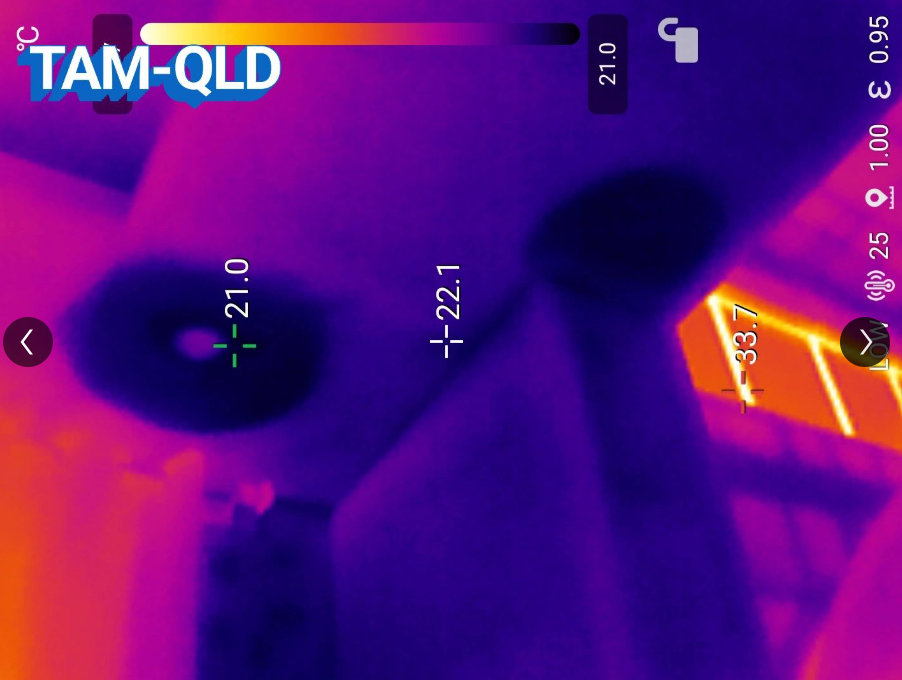
Thermal Imaging
Where appropriate, thermal imaging helps detect trapped moisture and temperature differences behind surfaces.
Borescope Inspection
Borescope cameras allow us to inspect accessible cavities and concealed spaces without unnecessary destructive works.
This helps identify:
Blocked drainage pathways
Failed flashing systems
Internal moisture buildup
Hidden construction defects
3. Targeted Remedial Works
Where practical, TAM-QLD carries out immediate remedial works during the investigation process to reduce further water ingress and help protect the building.
Depending on the issue, this may include:
Clearing blocked drainage pathways
Reinstating failed sealants
Applying polyurethane waterproofing systems
Installing specialist tape systems such as Eternabond
Temporary weatherproofing measures
Reglazing defective sections
Importantly, our focus is always on long-term performance rather than cosmetic patch repairs.
One of the most common things we encounter is excessive silicone applications that have actually made the leak worse by trapping moisture or blocking the designed drainage system entirely.
4. Reporting and Recommendations
Once the investigation is complete, TAM-QLD provides a detailed report outlining:
Identified defects
Likely causes of water ingress
Testing methods used
Photographic documentation
Recommended remedial works
Preventative maintenance recommendations
This reporting assists:
Building managers
Body corporates
Engineers
Insurance assessors
Procurement teams
in making informed decisions regarding remediation priorities and future budgeting.
Why Early Investigation Matters
Water ingress problems rarely improve on their own.
Unchecked leaks can eventually lead to:
Internal property damage
Mould growth
Corrosion of structural elements
Concrete deterioration
Paint failure
Resident complaints
Escalating remediation costs
The earlier the source is correctly identified, the easier and cheaper the remediation process usually becomes.
Why Brisbane Buildings Require Specialist Knowledge
High-rise leak investigations are not simple maintenance tasks.

Proper diagnostics require an understanding of:
Glazing systems
Façade construction
Waterproofing principles
Building movement
Rope access methods
Pressure management systems
Sealant compatibility
Drainage design
At TAM-QLD, our team combines rope access capability with practical façade and glazing expertise to investigate difficult leaks efficiently and safely across Brisbane and South East Queensland.
Book a Water Ingress Investigation
If your building is experiencing recurring leaks, unexplained moisture damage, or repeated repair failures, TAM-QLD can help with a systematic investigation and practical remediation strategy.
We provide high-rise water ingress investigations for:
Residential towers
Commercial buildings
Mixed-use developments
Riverfront properties
Complex façade systems
Contact Total Asset Maintenance today to arrange an inspection and protect your asset before a minor leak turns into a major remediation project.
"Quality maintenance, reliabily delivered, for exceptional value"

Comments